Legal Consequences of Business Operates Without Commercial Insurance
State Enforcement and Regulatory Compliance
Majority of tier 1 jurisdictions have legal requirements on commercial insurance coverage of certain types. There are numerous cases that require workers compensation, commercial auto, and some professional liability policies as mandatory commercial insurance. Disregard of such rules by a company results in an instant business insurance compliance failure. The state enforcement may impose fines as a result of operating without commercial insurance, the license suspension, and even a complete business closure due to the lack of insurance. In some states of the USA regulators carry out routinely the insurance audit and inspections, as well as demand a certificate of insurance. Regulators may issue stop work orders on the same day in case a company is unable to provide the proof.
❝ The moment a serious injury occurs, the question is no longer profit or loss, it is whether the business can exist tomorrow.❞
— Daniel Reyes, Business Litigation Attorney
Business License and Permit Denial
Without insurance, the local authorities will not give out or renew a business license in compliance. One of the restaurants in California that attempted to renew its health permit without submitting evidence of liability coverage was refused renewal and was shut down until it acquired insurance. This is a typical case of business license requirements meeting no commercial insurance ramifications. The requirements of commercial lease insurance also imply that tenants are liable to terminate the leases by their landlords in case they fail to provide valid cover. The loss of lease or permit can be instant loss of revenue.
Penalties and Fines for Operating Uninsured
The amount of the fine of Business Operates Without Commercial Insurance can soon surpass the premium of a full year insurance. There are states which provide fines daily on a Business Operates Without Commercial Insurance. Others include civil penalties and retroactive premium evaluation. Such insurance legal implications of these businesses are aimed at deterring uninsured businesses since uninsured losses will impose financial costs to the general population and the courts. Punishments on running without commercial insurance are not token. They weigh heavily purposely to make them comply.
Lawsuit and Liability Exposure
Civil Litigation Against an Uninsured Business
In case of an accident and a company is not covered by a commercial insurance, a civil litigation can be brought directly by any person who might be injured by the accident against a business and the owner. When a suit is filed against an uninsured entrepreneur, there is no policy limit to consider since there is no insurance company to cover the loss. Full financial damages, settlement costs and legal defense costs can be awarded by the courts against the company. This causes business liability that is uninsured to go as deep as individual savings, home and other personal properties.
Real World Injury Claim Example
A small Texan contractor was a non-insured worker. One worker was severely hurt by a fall and sued to cover the medical expenses and lost earnings. The worker will have sued the company directly since it lacked workers compensation cover. The verdict of the court amounted to more than several hundred thousand dollars and plunged the company into bankruptcy. It is a typical example of uninsured business accident liability costs situation, which is replicated every year in high risk markets.
❝ An uninsured business is effectively self-insuring every possible lawsuit, and most small companies simply do not have the balance sheet to survive that bet.❞
— Mark Cohen, Commercial Risk Consultant
Contract Loss and Client Lawsuits
A lot of the contracts have contractual insurance requirements and indemnity provisions which mandate active coverage. In case a vendor realises that a partner lacks the commercial insurance, he can terminate the contract instantly. In big business ventures this may result in secondary breach of contract and financial damages lawsuits. Uninsured businesses also tend to lose their largest clients first since due to vendor insurance compliance is mandatory in procurement.
Financial Damage and Business Continuity Risk
No Risk Transfer Means Full Financial Impact
Insurance is there to transfer the risks. In its absence all the losses appear in the balance sheet of the company. The uninsured company will be liable to cover the entire repair expenses, medical expenses, settlements, and lawsuits. Cash flow can be ruined even by mild incidences. This endangers the continuity of the business, and is very likely to lead to insolvency without the case even being heard by the trial court.
Operational Shutdown After a Major Claim
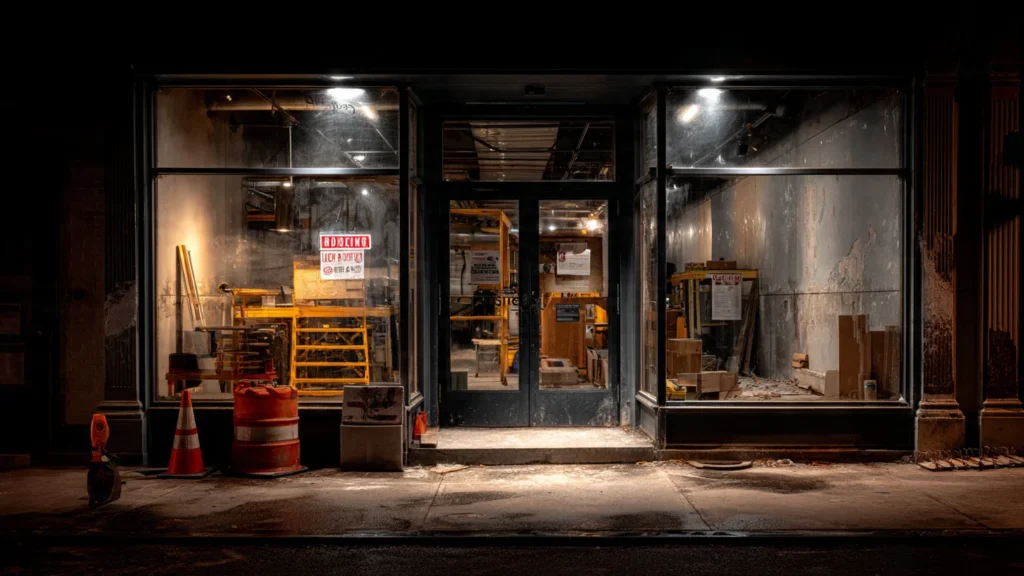
One of the examples is a retail shop in New York which had a major fire, which was a result of an electrical fault. Since the owner did not have any commercial insurance, he had no property cover and Business Operates Without Commercial Insurance. The construction and expenses of the building repair were to be financed personally, as well as months of lost income. The business would close down within a year. This is what occurs when the company attempts to conduct Business Operates Without Commercial Insurance and suffers property loss.
Personal Financial Liability for Owners
There are numerous instances where courts permit creditors to undertake personal financial open endedness when a company is apparent careless in fulfilling obligatory insurance regulations. This is particularly prevalent in uninsured contractor fines by state in which there are stringent safety laws. Running uninsured business may eliminate the legal protection which usually surrounds personal assets under a corporate format.
Compliance and Industry Specific Risks
High Risk Industries Face Immediate Shutdown
Commercial insurance is harshly enforced in construction, trucking, health and security services. A trucking company that runs without the necessary commercial auto coverage may be impounded on the road. Failure by a healthcare clinic to be covered by malpractice may result in the loss of their license. The given state business insurance demands are actively pursued due to the involvement of the social safety.
Workers Compensation and Employee Lawsuits
The punishment of the lack of no workers compensation insurance is very strong since injured employees should still be insured. Employees are allowed to directly sue employers in the event of workplace injuries with no coverage. In the absence of any form of mandatory coverage, courts tend to rule in favor of the worker. This poses huge uninsurable business risks and usually results in the quick bankruptcy.
Professional and Regulated Sectors
Professional liability coverage is commonly obligatory to lawyers, accountants, architects and consultants. They can lose professional accreditation in case they hold to work without it. This is a second type of business license commercial insurance that regulators have adopted to ensure the people are not victimized by the professionals.
Long Term Reputation and Market Access
Loss of Trust and Market Credibility
Difficulty Reentering the Insurance Market
Following a significant uninsured claim, the insurers can declare the business a high-risk. Premiums are higher than ever and certain carriers are not willing to cover at all. It complicates the future audit and inspections of insurance and further restricts growth opportunities.
❝ Operating without insurance is not saving money. It is borrowing disaster from the future.❞
Case Study
A medium sized roofing contractor in Florida opted to work without workers compensation insurance to save up on the cost of operating in a slow period. An employee who fell off a roof of a house was the recipient of various fractures that necessitated surgery and long term rehabilitation. Since there was no compulsory insuring, the injured employee challenged the company personally in a law suit concerning personal injury.
The court supported that the contractor had breached the state insurance norms and related the owner itself to the medical expenses, lost income, and other damages. The costs of legal defense were more than six figures. The ultimate settlement and judgmental responsibilities were way above what the company was holding in reserves. As a result of the contractor failing to pay, he went bankrupt, and due to this, his contractor license was impeded, and he was not able to be covered by future commercial insurance coverage at usual rates.
Less than 12 months after it started its operations the business was permanently shuttered not due to absence of business but due to an accident that happened to one of its uninsured employees that changed what seemed like a cost of doing business into an uncompensated loss. Compliance officers and insurance auditors often use this case as a prime example of how lack of a commercial insurance can ruin a sound company

Conclusion
Author Bio & Disclaimer
The author is a commercial insurance and risk management analyst who advises small and mid-sized businesses in Tier-1 countries on compliance, liability protection, and sustainable insurance strategy.
❝ This article is for general informational purposes only and does not constitute legal, financial, or insurance advice. Coverage requirements and penalties vary by jurisdiction and industry, so readers should consult licensed insurance and legal professionals for guidance specific to their business.❞ — Bunny Qureshi.